The Barrister
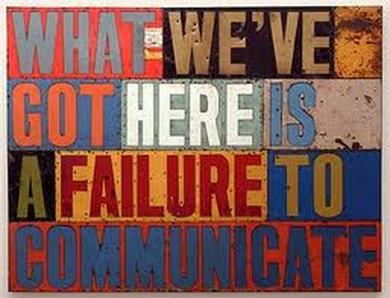
The current situation with the NFL is pretty hard to write about as a blogger who daylights as a lawyer. Part of me figures that I should bring my skills of legal analysis to the table, while another part of me is absorbed with my frustration with the situation as a fan, while a third part of me thinks those first two parts are stupid for even thinking I could have anything worth reading on the topic at this point. After all, devoid of contract negotiations, trades and training camp to talk about, ESPN's focus on the NFL, its favorite son, has been almost exclusively focused on the NFL lockout and the legal proceedings surrounding it. Well, even so, I'm going to indulge a few thoughts about what's happened to bring us here, and where I hope to see this thing go when all is said and done.
But, before I really get started, we all could use a little background on this one. Why? Because typical fans don't like thinking about the nitty-gritty of the sports labor issues because (a) they're boring, and (b) they make use furious when we think about the amounts of money involved. I can already feel the hate welling up. THINKING OF MY HAPPY PLACE. THERE IT IS.
The current situation with the NFL is pretty hard to write about as a blogger who daylights as a lawyer. Part of me figures that I should bring my skills of legal analysis to the table, while another part of me is absorbed with my frustration with the situation as a fan, while a third part of me thinks those first two parts are stupid for even thinking I could have anything worth reading on the topic at this point. After all, devoid of contract negotiations, trades and training camp to talk about, ESPN's focus on the NFL, its favorite son, has been almost exclusively focused on the NFL lockout and the legal proceedings surrounding it. Well, even so, I'm going to indulge a few thoughts about what's happened to bring us here, and where I hope to see this thing go when all is said and done.
But, before I really get started, we all could use a little background on this one. Why? Because typical fans don't like thinking about the nitty-gritty of the sports labor issues because (a) they're boring, and (b) they make use furious when we think about the amounts of money involved. I can already feel the hate welling up. THINKING OF MY HAPPY PLACE. THERE IT IS.
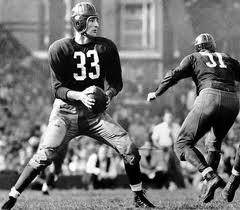
The NFL, with roots back to the 1920s, didn't have organized labor until the 1950s. Frankly, I'm surprised it took that long for players to get sick of busting their asses without getting a fair shake from the owners. In 1957, a year after the players union was formed, the Supreme Court decided the case of Radovich v. NFL, wherein it held that antitrust law did, indeed, apply to the NFL, despite the immunity previously granted to Major League Baseball.
[Sidebar: Anyone who wants to make the point about the American justice system being a dysfunctional mess need only refer to the fact that MLB is free of antitrust laws, while ALL OTHER AMERICAN PRO LEAGUES ARE. Why? Because a decision in 1922 by Oliver Wendall Holmes called it "just a game" and unrelated to "production," the thing antitrust law was supposedly concerned with. While I certainly agree that the Mets, for instance, are completely uninterested in producing, I think Justice Holmes's argument needs to be rethought.]
Under the umbrella of antitrust law, certain rules generally apply to the NFL's activities. Now, I reiterate that I generally don't know shit about antitrust laws, but the basics aren't all that complex. As applied to labor - a resource of business - these principles suggest that, just as it is bad (and most often illegal) for companies to band together to fix prices at specifically high rates that are not commiserate with the true market price as set by supply and demand, it is also generally bad for companies to band together and fix wages at artificially low rates that are not in line with the true market rate for such labor. Or, taking the principles even further, antitrust law generally tells us that separate businesses can't band together to create a system that funnels new labor resources and dictates where they can and cannot work.
Wait, but that's exactly what the NFL and every other league in America does, how could that be right? (Not Europe, though; they don't need fairytale concepts of fairness and parity to keep their leagues going. Not good enough? Fuck you then, you're relegated. Maybe next time, try getting some better players and not losing so much).
As you can see, the NFL - as it is currently set up - has found its way out of the scope of antitrust law. But, unlike MLB, the NFL did so through a bargain. A collective bargaining agreement, to be exact, which included - among other things - a basic agreement that the NFLPA would not bring any sort of antitrust litigation during the length of the CBA plus six months. In place of antitrust law, the NFL operates on a set of rules that appears to violate every principle of fair play in the marketplace.
I mention this general observation of the NFL to illustrate that the NFL's model of success, built on a business model that blatantly disregards the principles of antitrust law, has been hanging by a contractual thread. The things we like the most about the NFL as fans - the forced parity of the draft or the salary cap, for example - were possible only by virtue of the agreement that the players and owners came to back in the late 80s, and which was extended in 2006. The league, booming since that deal, has opted out of the agreement and, in my view, has done so with an utter disregard for the reality that the presence of a CBA - and the resulting immunity from antitrust restrictions - made the NFL the money-making machine that it is today.
[Sidebar: Anyone who wants to make the point about the American justice system being a dysfunctional mess need only refer to the fact that MLB is free of antitrust laws, while ALL OTHER AMERICAN PRO LEAGUES ARE. Why? Because a decision in 1922 by Oliver Wendall Holmes called it "just a game" and unrelated to "production," the thing antitrust law was supposedly concerned with. While I certainly agree that the Mets, for instance, are completely uninterested in producing, I think Justice Holmes's argument needs to be rethought.]
Under the umbrella of antitrust law, certain rules generally apply to the NFL's activities. Now, I reiterate that I generally don't know shit about antitrust laws, but the basics aren't all that complex. As applied to labor - a resource of business - these principles suggest that, just as it is bad (and most often illegal) for companies to band together to fix prices at specifically high rates that are not commiserate with the true market price as set by supply and demand, it is also generally bad for companies to band together and fix wages at artificially low rates that are not in line with the true market rate for such labor. Or, taking the principles even further, antitrust law generally tells us that separate businesses can't band together to create a system that funnels new labor resources and dictates where they can and cannot work.
Wait, but that's exactly what the NFL and every other league in America does, how could that be right? (Not Europe, though; they don't need fairytale concepts of fairness and parity to keep their leagues going. Not good enough? Fuck you then, you're relegated. Maybe next time, try getting some better players and not losing so much).
As you can see, the NFL - as it is currently set up - has found its way out of the scope of antitrust law. But, unlike MLB, the NFL did so through a bargain. A collective bargaining agreement, to be exact, which included - among other things - a basic agreement that the NFLPA would not bring any sort of antitrust litigation during the length of the CBA plus six months. In place of antitrust law, the NFL operates on a set of rules that appears to violate every principle of fair play in the marketplace.
I mention this general observation of the NFL to illustrate that the NFL's model of success, built on a business model that blatantly disregards the principles of antitrust law, has been hanging by a contractual thread. The things we like the most about the NFL as fans - the forced parity of the draft or the salary cap, for example - were possible only by virtue of the agreement that the players and owners came to back in the late 80s, and which was extended in 2006. The league, booming since that deal, has opted out of the agreement and, in my view, has done so with an utter disregard for the reality that the presence of a CBA - and the resulting immunity from antitrust restrictions - made the NFL the money-making machine that it is today.
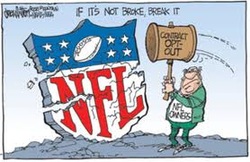
So, yeah, basically FUCK THE OWNERS. It is a shocking move of hubris to ignore the fact that your success, built upon a model of price fixing and collaboration between businesses, is only possible due to a CBA, and then to make the active choice to opt-out of the very thing that makes your business out of the reach of rules that apply to all other businesses.
Beyond that, my liberal brain feels that - valid or not - the owners' points deserve to be shat upon because the Mega-Rich should never be allowed to pretend that a shortage of a few million dollars is putting them in dire straits. I don't care about any arguments about the NFL taking off due to their investment in it, and that fairness dictates that they are entitled to a bigger cut. The NFL is the most popular sport in the country because fans who - in comparison - barely have two pennies to rub together have utterly devoted themselves to the sport. Sponsorship and corporate dollars followed that wave of interest in America's Everyman, and the dollars have been coming in by the bucket-load. The owners got real rich, and now they want to get a little richer. Don't sit there and pretend I should feel sorry for you and your life that all us plebes would fucking kill for. All this talk about how expensive it is to grow the game and how there's a lack of incentives for clubs to invest is asinine. If there wasn't an incentive, how the fuck did this monstrosity get built?
Beyond that, my liberal brain feels that - valid or not - the owners' points deserve to be shat upon because the Mega-Rich should never be allowed to pretend that a shortage of a few million dollars is putting them in dire straits. I don't care about any arguments about the NFL taking off due to their investment in it, and that fairness dictates that they are entitled to a bigger cut. The NFL is the most popular sport in the country because fans who - in comparison - barely have two pennies to rub together have utterly devoted themselves to the sport. Sponsorship and corporate dollars followed that wave of interest in America's Everyman, and the dollars have been coming in by the bucket-load. The owners got real rich, and now they want to get a little richer. Don't sit there and pretend I should feel sorry for you and your life that all us plebes would fucking kill for. All this talk about how expensive it is to grow the game and how there's a lack of incentives for clubs to invest is asinine. If there wasn't an incentive, how the fuck did this monstrosity get built?

That light is the shining of Jerry Jones' alien face when he takes his fake skin off. Like in "Cocoon," except with way less Steve Guttenberg
So, no, I don't buy that one fucking bit. And even if I was inclined to believe that owners were seriously hampered by the latest CBA, the place to make that argument is at the negotiating table, with hard facts to support that claim. Because, honestly, all I see is the dollar signs and I want to punch someone in the throat.
Which brings me to perhaps my most central point about the owners - they've been complaining about this shit since the last CBA extension was signed in 2006. WHY FUCKING SIGN IT THEN? My guess is that they did so because there was money to be made, and where there's money to be made, there's an incentive to invest. If owners are running at losses, that's one thing, but most of these guys are independently wealthy and basically chose to own a team because it seemed like an awesome and fun thing to do. And, frankly, from what I've heard from those speaking out of the NFLPA, the owners never even went so far as to show the union any records that might demonstrate the financial difficulties they described or that further investment in the league has really ever been in doubt.
Which brings me to perhaps my most central point about the owners - they've been complaining about this shit since the last CBA extension was signed in 2006. WHY FUCKING SIGN IT THEN? My guess is that they did so because there was money to be made, and where there's money to be made, there's an incentive to invest. If owners are running at losses, that's one thing, but most of these guys are independently wealthy and basically chose to own a team because it seemed like an awesome and fun thing to do. And, frankly, from what I've heard from those speaking out of the NFLPA, the owners never even went so far as to show the union any records that might demonstrate the financial difficulties they described or that further investment in the league has really ever been in doubt.
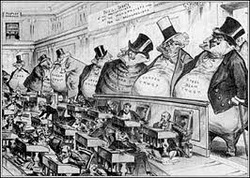
Incidentally, the owners arguments are the same ones we've been hearing from most sectors of the super-rich American upper class: the current system governing Industry X doesn't give the wealthy enough of a return on their investment to make further investment worth it, and that unless we all (through our government, often) agree to redefine the basic rules of Industry X, those dollars of investment will be picked up and taken elsewhere. This risk of capital flight acts as effectively as a knife to our throats, but is rarely if ever backed up with actual evidence that the current system - whether it be the tax code or a set of "oppressive" environmental regulations - is actually a threat to sustainable growth and investment in the particular industry. Yet, even though we're not given evidence and we're often given little else than a spoiled over-sized rich kid complaining that he wants more and he wants it now, we so fear losing those rich kid dollars that we cave in and reach a new agreement to give more - more tax breaks, more exemptions from regulations. And then, a few years later, when that new status quo is attacked with an eerily similar set of threats, it is likely that we, collectively, won't notice that we're being duped all over again.
Given the parallels to American big business and the crock of shit that corporate barons have been shoving down our throats, it is really hard for me to not side with the players. The owners CHOSE to end the CBA early, and they CHOSE to lock the players out. In doing so, they sharpened the knife against the throat of the players. But, rather than just mindlessly cave at the threat, the players are fighting back - if only to demand the common decency of being allowed to see the actual evidence supporting the NFL's position. The NFLPA's decision to decertify the union, which the owners are branding a "sham" within the pending appeal in the Eighth Circuit, was a last-ditch effort to re-balance the bargaining positions. Once decertified, the players had an opportunity - pending the Court's forthcoming decision - to get the Court's assistance in stopping the lockout and, in essence, putting the owners back in their place. And, in the meantime, as the sides continue to negotiate a new CBA, the unresolved and fundamental legal questions of whether the courts can even get involved in stopping the lockout remain a useful weapon for the players, if only because those questions mean that the NFL can't simply bank on a continued lockout.
Of course, this begs the question - what if the court makes its decision before the sides have reached an agreement? Well, if the players; argument wins the day and they get their injunction (stopping the lockout), the bargaining table will be an even playing field again. If the owners succeed in their argument that the court doesn't have the jurisdiction to issue an injunction in this labor dispute, the players may have no other choice but to bend to the owners' whims or just accept the lockout and ditch the season. And if the NFL continues in its absurd refusal to succinctly lay out its argument for a new CBA, and continues unwilling to give in to player demands about compensation for an extra two regular season games and revenue set aside for long-term player health care, the players may honestly have no choice but to balk from the bargaining table. Such a move if not good for anyone - except maybe the NHL - though it still may be better than the alternative.
But, clearly, what the hell do I know? I'm just a fan, and I like players - not owners. (Except T-Pegs. I Love you Terry!!) However this plays out, I just hope that our heroes get a fair deal, and that they aren't afraid to bust some heads to get there.
Given the parallels to American big business and the crock of shit that corporate barons have been shoving down our throats, it is really hard for me to not side with the players. The owners CHOSE to end the CBA early, and they CHOSE to lock the players out. In doing so, they sharpened the knife against the throat of the players. But, rather than just mindlessly cave at the threat, the players are fighting back - if only to demand the common decency of being allowed to see the actual evidence supporting the NFL's position. The NFLPA's decision to decertify the union, which the owners are branding a "sham" within the pending appeal in the Eighth Circuit, was a last-ditch effort to re-balance the bargaining positions. Once decertified, the players had an opportunity - pending the Court's forthcoming decision - to get the Court's assistance in stopping the lockout and, in essence, putting the owners back in their place. And, in the meantime, as the sides continue to negotiate a new CBA, the unresolved and fundamental legal questions of whether the courts can even get involved in stopping the lockout remain a useful weapon for the players, if only because those questions mean that the NFL can't simply bank on a continued lockout.
Of course, this begs the question - what if the court makes its decision before the sides have reached an agreement? Well, if the players; argument wins the day and they get their injunction (stopping the lockout), the bargaining table will be an even playing field again. If the owners succeed in their argument that the court doesn't have the jurisdiction to issue an injunction in this labor dispute, the players may have no other choice but to bend to the owners' whims or just accept the lockout and ditch the season. And if the NFL continues in its absurd refusal to succinctly lay out its argument for a new CBA, and continues unwilling to give in to player demands about compensation for an extra two regular season games and revenue set aside for long-term player health care, the players may honestly have no choice but to balk from the bargaining table. Such a move if not good for anyone - except maybe the NHL - though it still may be better than the alternative.
But, clearly, what the hell do I know? I'm just a fan, and I like players - not owners. (Except T-Pegs. I Love you Terry!!) However this plays out, I just hope that our heroes get a fair deal, and that they aren't afraid to bust some heads to get there.
Follow me on Twitter! @theycallmedubs
And the DGWU Crew @DGWUSports
And the DGWU Crew @DGWUSports
 RSS Feed